
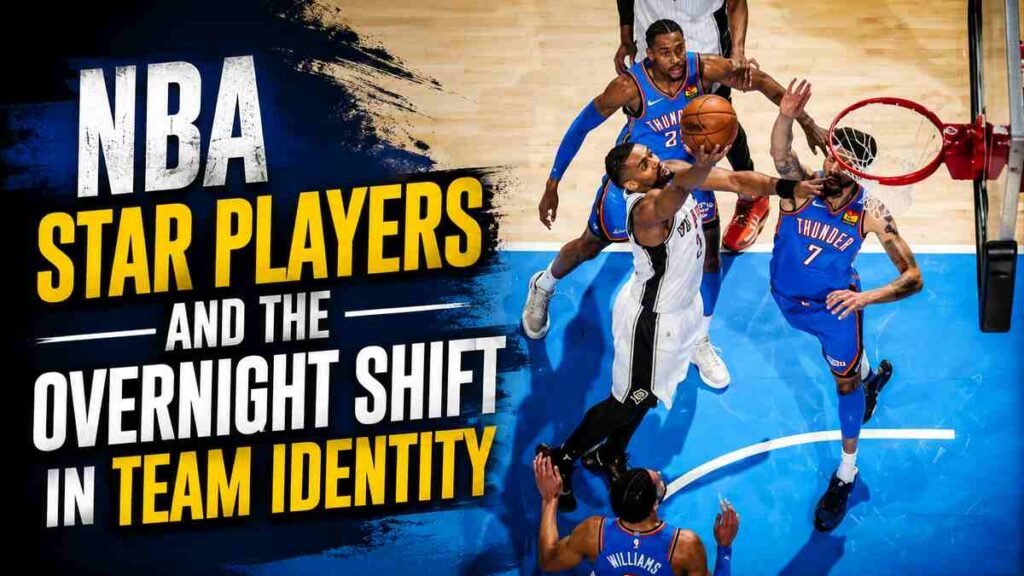

Hey there, fellow hoops fans. If you’ve followed the NBA for any length of time, you know how one big move can flip everything upside down for a franchise. A star player packs up and heads to a new city, and suddenly the whole team’s vibe, playing style, and even how fans see them changes almost instantly. That’s what we’re talking about here with NBA star players and the overnight shift in team identity.
I’ve spent countless nights watching games, yelling at the TV during trades, and chatting with buddies about what it all means. One season your team feels like a scrappy underdog, the next it’s a flashy contender or a rebuilding project. These shifts hit hard—not just on the court, but in the hearts of players, coaches, and especially us fans. Let’s walk through how this happens, why it matters, and what it looks like in real life.
The Power of a Star Player in Shaping a Franchise
Think about what makes a team have its own identity. It’s more than just wins and losses. It’s the style of play, the attitude, the culture in the locker room, and the connection with the city. When a superstar arrives or leaves, that foundation can crack or get rebuilt overnight.
Star players bring their habits, preferences, and expectations. A scorer like Kevin Durant changes how offenses run—more isolation plays, emphasis on mid-range and threes. A playmaker like LeBron James turns teammates into better versions of themselves through vision and leadership. Teams start drafting or signing players who fit around that star, which locks in a new direction.
From my own experience following the league, these changes feel personal. I remember being a kid glued to the TV during big free agency announcements. The excitement mixed with worry for the old team. It forces everyone to adapt fast. Coaches adjust schemes. Role players find new roles or get moved. Front offices scramble to fill gaps. And fans? We debate loyalty, ring-chasing, and what our team stands for now.
The business side plays a huge role too. Contracts, cap space, and trade demands mean stars hold a lot of power. A single request can push a franchise into rebuild mode or instant contention. This player empowerment era makes overnight shifts more common than ever.
Also Read: StreamEast.com: Watch Free Live Sports with Amazing Secrets.
Historical Cases That Show the Shift in Action
Let’s look at some real examples where one player altered a team’s path dramatically.
LeBron James and the Cavaliers’ Rollercoaster
Cleveland’s story with LeBron shows both sides of the coin. In his first stint, he turned a struggling franchise into contenders. The Cavs went from lottery team to Finals appearances. The identity became “LeBron’s team”—high-powered offense, clutch moments, and that hometown hero narrative.
When he left for Miami in 2010, everything changed. The team tanked hard, posting some of the worst records in franchise history. Fans felt abandoned. The identity shifted to a rebuilding outfit focused on high draft picks. It was painful, with empty arenas and low expectations.
LeBron came back in 2014, and boom—another overnight flip. The Cavs loaded up with talent around him and won the 2016 title. That run defined a generation for Cleveland sports. Then his second departure to the Lakers in 2018 sent them back into rebuild mode. Records dropped to the teens in wins initially. It took years of smart drafting and patience to climb back.
I talked to a buddy who’s a die-hard Cavs fan during one of those low periods. He said it felt like losing a piece of the city’s pride. The arena atmosphere changed. Merch sales probably dipped. But the rebuild eventually brought fresh faces like Donovan Mitchell, giving the team a new, resilient identity focused on defense and balanced scoring.
Also Read: Streameast Live: Best Way to Watch Sports Streams Online.
LeBron’s Move to the Lakers
On the other side, the Lakers in 2018 were a fading giant after years without playoffs. LeBron’s arrival injected instant relevance. The team shifted from whatever remnants of the Kobe era lingered to a star-driven, win-now mentality. They surrounded him with veterans and later added Anthony Davis.
Suddenly, the Lakers’ identity became championship-or-bust again. The Hollywood spotlight intensified. Younger players had to learn to play with a legend who demands the ball and dictates pace. It led to the 2020 bubble title, solidifying the shift. But it also meant some growing pains as the roster turned over multiple times.
Kevin Durant’s Series of Moves
Durant offers another clear case. Joining the Warriors in 2016 turned a fun, record-setting team into a superteam with unmatched firepower. Their identity evolved from plucky, motion-heavy offense to near-invincible dominance with multiple titles.
Then to Brooklyn in 2019—another big change. The Nets went from rebuilding to pairing him with Kyrie Irving for a new big-three experiment. Injuries and drama complicated things, but the on-court identity became iso-heavy scoring with elite talent. When Durant eventually moved on to Phoenix and later Houston, the Nets had to pivot back to a different, less star-reliant approach.
In Houston recently, adding Durant to a young, athletic Rockets squad is reshaping them from up-and-coming to a more veteran-influenced contender. Their style might incorporate more half-court sets alongside their pace.
These moves highlight how one player can force a franchise to rethink everything from coaching hires to marketing.
Other Notable Shifts
Anthony Davis forcing his way to the Lakers paired with LeBron created a defensive anchor identity alongside scoring. Teams like the Thunder after trading stars rebuilt through youth and now sit as contenders with a fresh, exciting style. Even mid-tier moves ripple out, affecting chemistry and expectations.
Also Read: Streameast MLB: Master Streaming Tips for Reliable Games.
The Human Side: Fans, Players, and Emotional Impact
These overnight changes aren’t just X’s and O’s. They affect people deeply.
For fans, it’s like a breakup. You invest time, money, and emotion into players who wear your team’s jersey. When they leave, it can feel like betrayal, especially in smaller markets. Loyalty gets questioned. I know folks who stopped watching for a season or two after big departures. The pain points are real—uncertainty about the future, watching rivals improve, and the sense that your team is starting over.
Players face it too. A star moving has to adjust to new teammates, city, and expectations. Role players get displaced or see their minutes change. Veterans might mentor differently or clash with the new system. Stories from locker rooms often talk about the awkward transition periods where chemistry needs time to build.
Coaches get fired or adapt. Front offices face pressure from owners and media. It’s a high-stakes game where one decision cascades.
Yet, there’s an upside. New stars bring hope. Young teams get a boost in visibility. Cities rally around fresh narratives. The league stays exciting because of this fluidity.
Why These Shifts Happen More Often Now
Several factors fuel the frequency. Free agency rules, player agents, social media, and big contracts give stars leverage. Teams chase rings aggressively, leading to quicker overhauls. Analytics show how one elite talent can elevate a roster’s ceiling, tempting GMs to go all-in.
Compare to past eras where loyalty or long-term builds were more common. Today’s NBA rewards bold moves, but it also risks instability. Small-market teams struggle to keep talent, widening the gap between haves and have-nots.
Also Read: StreamEast UFC: Best Unmissable Live Streams and Schedule.
How Teams Can Handle or Even Benefit from the Change
Not every shift has to be chaotic. Smart organizations prepare.
Focus on culture that outlasts individuals. Develop young talent so departures hurt less. Build flexible systems that adapt to different star styles. Engage fans transparently—explain the plan and involve the community.
For teams losing a star, use the assets wisely. Draft picks and cap space from trades can accelerate rebuilds, like Cleveland did post-LeBron. For teams gaining one, integrate carefully. Don’t force-fit everyone immediately. Let the star lead while filling complementary pieces.
Examples of success include teams that turned transitions into strengths through patience and data-driven decisions.
The Broader Picture for the NBA
These overnight identity shifts keep the league dynamic. They create storylines that draw viewers. Rivalries intensify. Underdog tales emerge. But they also raise questions about parity and fan retention in certain cities.
As a fan, I love the drama but wish for more stability sometimes. Seeing a team grow organically over years has its own beauty. The balance between player freedom and franchise health matters.
Looking ahead, with new CBA rules and evolving economics, we might see tweaks. But stars will always move, and teams will shift identities accordingly.
Also Read: StreamEast WWE: Best Streaming Options, Schedules, and Tips.
Wrapping Up Our Chat on This Topic
We’ve covered a lot—from specific player moves that flipped franchises to the emotional rollercoaster everyone rides. NBA star players and the overnight shift in team identity capture what makes basketball so captivating: change, adaptation, and the constant search for that winning formula.
Next time a big trade or signing drops, take a moment to think about the bigger picture. How will it reshape the team’s play? What will fans feel? And how does it fit your own connection to the game?
I’d love to hear your thoughts in the comments. Which move shocked you the most? Has your favorite team gone through one of these shifts? Share your stories—we’re all in this hoops journey together.