

I remember the first time I sat down on a Sunday morning, coffee in hand, ready for a full slate of NFL games. I had my favorite team picked, but when it came to the other matchups, I was guessing based on last season’s records or a quick score from the night before. By halftime in one game, I realized I had no idea why one team was dominating. That frustration stuck with me. Since then, I’ve made it a habit to compare NFL teams properly before kickoff, and it has changed how I watch, talk about, and even bet on games.
If you are tired of feeling lost during broadcasts or making picks based on gut alone, this guide walks you through a practical, repeatable process. You do not need insider access or paid subscriptions for the basics—plenty of free online resources get the job done. Let’s get into it so you can head into game day with confidence.
Why Spending Time on Team Comparisons Pays Off
Football moves fast once the ball snaps. Without preparation, you miss the storylines that make a game interesting. Comparing teams helps you spot why a heavy favorite might struggle or why an underdog has a real shot.
For casual fans, it deepens your understanding and makes watching more rewarding. You start noticing adjustments, player matchups, and coaching decisions in real time. For fantasy football players, it improves start/sit decisions and waiver wire moves. Bettors use it to find value in spreads, totals, or player props. Even if you just enjoy debating with friends, solid comparisons give you something real to back up your takes.
The pain point many of us share is information overload. There are stats everywhere, but without a system, it feels chaotic. A structured online comparison cuts through the noise and focuses on what actually moves the needle for that specific game.
Also Read: StreamEast.com: Watch Free Live Sports with Amazing Secrets.
Start with the Big Picture: Recent Form and Season Context
Before diving into numbers, check how teams have been playing lately. A team that started hot but lost key pieces looks different from one that has found its rhythm after a slow start.
Head to ESPN or NFL.com for standings, recent results, and simple recaps. Look beyond wins and losses—note margin of victory, strength of schedule, and home/away splits. A team dominating at home but struggling on the road tells you something important for that week’s venue.
I once overlooked a team’s road woes and picked them to cover on the road against a solid home squad. They got blown out. Lesson learned: context matters. Use sites like TeamRankings.com for quick filters on situational stats, such as performance against the spread or in divisional games.
Offensive Comparison: Beyond Total Yards
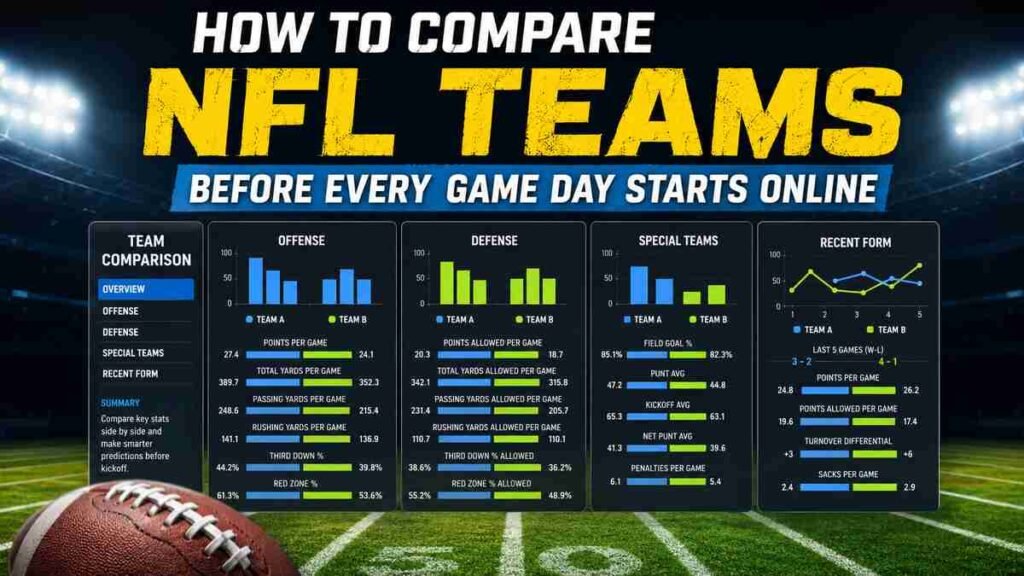
Offense wins games, but not all offenses are built the same. Compare these areas:
Passing Game Look at completion percentage, yards per attempt, touchdowns, interceptions, and sack rate. Raw passing yards can mislead if one team throws more because they trail often. Check adjusted metrics or efficiency numbers where available.
Rushing Attack Yards per carry, success rate on early downs, and red zone efficiency matter a lot. A strong run game controls the clock and sets up play-action passes.
Scoring and Red Zone Points per game and red zone touchdown percentage show finishing ability. Teams that settle for field goals often lose close games.
Pro Football Reference (PFR) and Stathead make side-by-side views easy. You can filter by situation or opponent quality. PFF offers grades that factor in quality of competition and scheme fit.
Personal story: Last season I compared two teams where Team A had better total offense stats, but Team B excelled in the red zone and protected the ball better. Team B won a low-scoring grind-it-out game. The numbers predicted it if you looked in the right places.
Also Read: Streameast MLB: Master Streaming Tips for Reliable Games.
Defensive Matchups: Stopping What the Opponent Does Best
Defense often decides playoff games. Focus on how each unit performs against the opponent’s primary strength.
Key defensive stats to compare:
- Points allowed per game
- Yards allowed per play
- Pass defense (completion percentage allowed, yards per attempt, INT rate)
- Run defense (yards per carry allowed)
- Pressure rate on the quarterback and coverage skills
Advanced sites like FTN or NFL Savant add layers with metrics such as EPA (Expected Points Added) per play or DVOA-style efficiency. These show how a defense performs in context, not just volume stats.
Pay attention to personnel matchups. Does one team have a dominant edge rusher facing a weak tackle? Will a speedy receiver exploit a slow secondary? Next Gen Stats on NFL.com visualize this well with tracking data.
Injuries hit defenses hard. A missing star linebacker or corner changes everything. Check official injury reports on team sites or aggregated on ESPN close to game time.
Also Read: StreamEast UFC: Best Unmissable Live Streams and Schedule.
Special Teams and Coaching Edges
Special teams get overlooked until a missed field goal or blocked punt decides the outcome. Compare field goal accuracy, punt coverage, return yardage, and hidden stats like starting field position after kicks.
Coaching matters too. Some head coaches excel at in-game adjustments or clock management. Look at records in close games or after bye weeks. Offensive versus defensive-minded coaches often approach games differently—aggressive versus conservative play-calling shows up in fourth-down decisions.
Sites like nfeloapp.com provide power ratings and projections that bake in coaching and overall team quality.
Weather, Venue, and Situational Factors
Game day conditions change strategies. Indoor domes neutralize weather, but outdoor games in wind, rain, or extreme cold favor run-heavy teams and strong special teams.
Check forecasts on weather sites and cross-reference with historical performance. Home-field advantage includes crowd noise affecting communication, especially on the road for young quarterbacks.
Travel fatigue and short weeks (Thursday games) also play roles. Track these on schedules and note rest advantages.
Also Read: Streameast Live: Best Way to Watch Sports Streams Online.
Step-by-Step Online Process I Use Before Games
Here is my routine that takes 20-40 minutes:
- Open NFL.com or ESPN for basic standings, injuries, and previews.
- Go to Pro Football Reference for head-to-head history and detailed team stats. Use their Versus Finder for quick comparisons.
- Check advanced analytics on PFF, FTN, or TeamRankings for efficiency and matchup-specific data.
- Review betting lines and implied probabilities on Covers or similar for market consensus, then form your own view.
- Watch short highlight or film breakdown clips on YouTube from trusted analysts to see scheme fit.
- Note key injuries and practice participation.
- Write down 2-3 matchup edges that could decide the game.
This system keeps things organized without overwhelming you.
Tools and Resources Worth Bookmarking
- Free Tier Leaders: NFL.com team stats, ESPN standings, Pro Football Reference.
- Advanced: PFF (some free grades), FTN Stats, NFL Savant.
- Matchup Specific: TeamRankings situational stats, nfelo power ratings.
- Injuries and News: Official NFL app, Rotoworld or similar for updates.
Many of these update throughout the week, so check closer to Sunday for the latest.
Learning from Real Matchup Examples
Take a hypothetical divisional game between two strong teams. One has a top passing offense but middling run defense. The other boasts a stout front seven but a vulnerable secondary.
By comparing red zone efficiency and turnover rates, you might conclude the game stays close and goes under the total if both defenses force punts early. Or, if weather favors the run, the team with the better ground game gains an edge.
Real seasons provide countless lessons. Teams that looked dominant on paper fell apart due to injuries or poor coaching adjustments. Consistent comparison helps you spot those shifts early.
Also Read: StreamEast WWE: Best Streaming Options, Schedules, and Tips.
Mistakes That Trip People Up
Relying only on last season’s standings ignores roster changes and improvement curves. Chasing shiny total yardage stats without efficiency context leads to wrong conclusions. Ignoring injuries until game day is too late. Overvaluing one metric (like sacks) while missing the full picture also hurts.
Avoid confirmation bias—do not just seek data that supports your favorite team. Stay objective.
Building the Habit for Every Game Day
Start small. Pick two or three games each week and run through the key comparisons. Over time, it becomes faster and you develop intuition for what matters most in specific situations.
Share your findings with friends or in online communities. You will be surprised how much more engaging conversations become when backed by real analysis rather than hot takes.
For fantasy or betting, track your own record using this method. Many people see improvement quickly because they move from emotion-driven decisions to data-informed ones.
Final Thoughts on Getting Ready for Kickoff
Comparing NFL teams online does not guarantee you pick every winner, but it gives you a clear edge in understanding and enjoyment. You stop feeling like a passive viewer and start seeing the game like coaches and analysts do.
Next time Sunday morning rolls around, spend a little time with the resources above. Compare the offenses, defenses, coaching, and situations. You will walk into game day more prepared, and that satisfaction of “I saw that coming” never gets old.
Bookmark this process, refine it with your own favorite sites, and make it part of your routine. Your watch experience, fantasy teams, and friendly debates will all benefit. Now go make those comparisons—kickoff waits for no one, but good prep makes every snap more meaningful.
For more useful articles, visit my website: StreamEastt.us.