
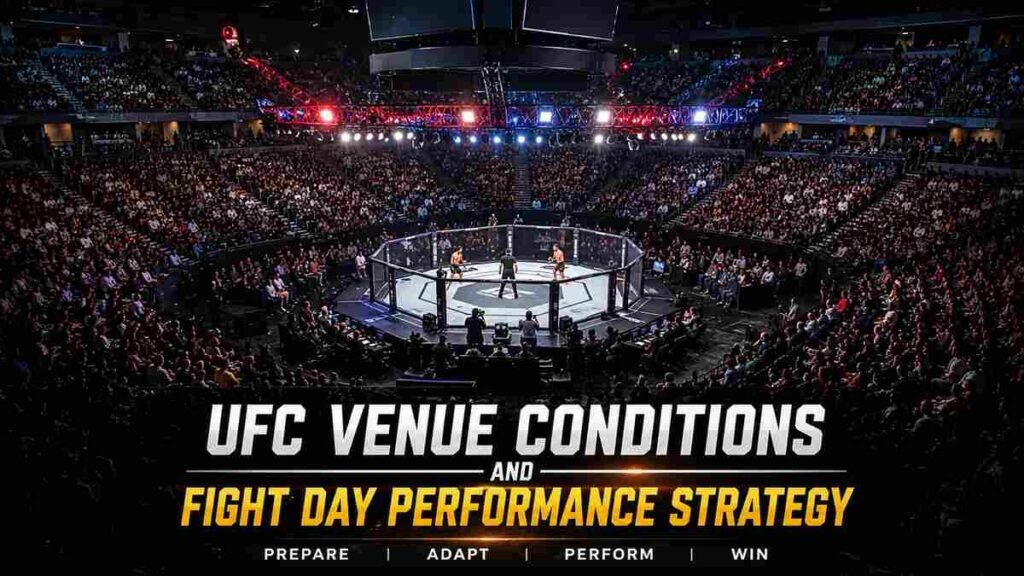

Hey, fight fans. If you’ve ever watched a UFC card and wondered why one guy looks like he’s swimming through molasses while the other is still exploding with energy in round four, you’re not alone. A lot of it comes down to how fighters handle the specific conditions of the venue on fight day. I’ve spent years following the sport closely, chatting with coaches, and seeing how these details play out in real time. Today, we’re breaking down UFC venue conditions and fight day performance strategy in a way that actually helps you understand what’s happening inside that octagon.
Whether you’re a fighter yourself, a coach, or just a dedicated fan who wants to appreciate the sport on a deeper level, this guide walks through the real-world factors that can swing a bout. No fluff—just practical talk based on what actually happens when the cage door closes.
Why Venue Conditions Matter More Than Most Fans Realize
Every arena or facility brings its own mix of temperature, air quality, altitude, lighting, and crowd energy. Fighters train for months in controlled environments, but on fight night, they step into something completely different. That mismatch can drain energy, affect recovery between rounds, and even change how a game plan unfolds.
I remember watching a card in a hot, humid spot a few years back. One fighter, known for his pace, started strong but visibly slowed midway through. His opponent, who had prepared for the heat, capitalized late. Small details like this separate good performances from legendary ones.
Also Read: StreamEast.com: Watch Free Live Sports with Amazing Secrets.
Breaking Down Common UFC Venue Conditions
Temperature and Humidity Inside the Arena
Arnas can get surprisingly warm, especially with lights blazing on the octagon and a packed house generating body heat. Fighters often comment on sweating heavily even during warm-ups. High humidity makes it worse because sweat doesn’t evaporate efficiently, leading to quicker overheating and faster fatigue.
In places like Abu Dhabi or outdoor setups, the combination of heat and moisture hits hard. One fighter described struggling to breathe properly because the air felt thick. Dry heat brings different problems—rapid dehydration if hydration isn’t spot on.
Air conditioning helps in bigger arenas, but it’s not always perfect. The octagon area can still trap heat. Fighters from colder climates sometimes feel this more, while those used to tropical training have an edge.
Altitude Effects on Cardio and Power
Altitude is one of the sneakiest factors. Cities like Mexico City, Denver, or Salt Lake City sit thousands of feet above sea level. Less oxygen means your body works harder for the same output. Fighters who don’t acclimate can gas out early, even if their conditioning is elite at sea level.
Cain Velasquez’s title loss in Mexico City is a classic example. He looked like a different fighter because the altitude robbed his explosiveness. Jeremy Stephens later spent serious money training at elevation before his own fight there to avoid the same fate. Smart move.
Even moderate altitudes, like Salt Lake City at around 4,300 feet, have shown visible effects on fighters’ pace and recovery.
UFC Apex vs Traditional Arenas
The UFC Apex in Las Vegas is a different animal. It’s smaller and more intimate, which some say leads to faster-paced fights and more finishes simply because of the contained space. The crowd is limited, so the energy feels different—no massive roar pushing you through tough moments.
Bigger arenas like Madison Square Garden or T-Mobile Arena bring massive crowds, louder atmospheres, and sometimes more pressure. The walkout, the lights, the noise—it can elevate performance for fighters who feed off it or overwhelm those who don’t handle it well.
Lighting, ring size (the Apex sometimes uses a smaller octagon), and even floor setup play roles. These aren’t huge differences on paper, but they add up when every second counts.
Other Venue Variables
Crowd noise can be motivating or distracting. Travel distance and time zone changes affect sleep and recovery. Some international venues have unique setups, like temporary structures that might have different ventilation or humidity levels.
Also Read: Streameast MLB: Master Streaming Tips for Reliable Games.
How These Conditions Impact Fight Day Performance
Your body is already stressed from weight cutting. Add unfamiliar heat, thin air, or a roaring crowd, and small issues become big ones.
- Cardiovascular Strain: Altitude reduces oxygen delivery. Heat increases heart rate as your body tries to cool itself. Combined, they limit how long you can sustain high output.
- Recovery Between Rounds: Poor conditions slow the body’s ability to clear lactate and restore energy. Fighters who manage this better often win close fights.
- Power and Speed: Fatigue hits striking power and wrestling explosiveness first. A fighter who conserves energy early has an advantage later.
- Mental Toughness: When your body feels off, doubts creep in. The best performers have strategies to stay focused regardless.
I’ve seen fighters adjust mid-fight—shortening combinations, relying more on clinch work, or changing pace based on how the venue feels. That adaptability comes from preparation.
Also Read: StreamEast UFC: Best Unmissable Live Streams and Schedule.
Building a Fight Day Performance Strategy Around Venue Conditions
The best fighters and teams treat venue research as part of camp. They look up weather patterns, arena specs, and historical data from past events there.
Acclimation Training
For altitude fights, arriving early or training at similar elevation is key. Some use altitude masks or chambers, though real exposure works best. For heat, sauna sessions or hot-weather training help the body adapt to handle higher core temperatures.
Nutrition and Hydration on Fight Day
This is huge after weigh-ins. Fighters need to rehydrate smartly—electrolytes matter as much as water. Overdoing it can cause stomach issues; underdoing it leaves you flat.
A solid approach often looks like this:
- Start rehydrating right after weigh-ins with electrolyte solutions.
- Focus on carbs for glycogen restoration—rice, potatoes, fruits.
- Moderate protein, low fat and fiber to avoid digestive problems.
- On fight day, smaller meals 3-4 hours out, with quick carbs closer to walkout if needed.
Every fighter is different, so teams test what works in training. One guy might load heavily the night before; another prefers spreading intake.
Warm-Up and Recovery Tactics
Venue temperature affects warm-up length. In a hot arena, you might not need as long to break a sweat. In cooler spots, extra time prevents injury. Dynamic movement, light sparring, and breathing exercises help.
Between rounds, corner advice focuses on breathing, mindset resets, and quick adjustments. Some fighters use ice vests or cooling towels pre-fight in hot conditions.
Mental and Tactical Adjustments
Visualize the venue during camp. Practice fighting when fatigued or uncomfortable. Develop a game plan with contingencies: “If I feel the altitude, I’ll use more clinch work to control pace.”
Crowd energy is another tool. Some fighters block it out; others use it as fuel. Knowing your personality helps.
Also Read: StreamEast WWE: Best Streaming Options, Schedules, and Tips.
Learning From Fighters Who Nailed (or Struggled With) Venue Challenges
Look at how some have adapted. Fighters from high-altitude regions sometimes have natural advantages in certain spots. Others travel early and train locally.
One story that sticks with me is a contender who lost a decision in a hot, humid venue. He later said he didn’t respect the conditions enough in training. His next camp included specific heat prep, and he looked sharper in the rematch.
On the flip side, smart teams turn conditions into advantages. Training in Thailand for humidity tolerance or Colorado for altitude builds resilience that shows on fight night.
Even the UFC Apex has its quirks. Fighters who compete there regularly learn to manage the smaller space and different energy. It rewards volume and aggression in ways bigger arenas sometimes don’t.
Practical Tips for Fighters, Coaches, and Fans
If you’re competing:
- Research the venue months out.
- Simulate conditions in training.
- Have a detailed fight week nutrition plan with venue adjustments.
- Prioritize sleep and recovery leading up to the event.
- Work with your team on mental strategies for different atmospheres.
For coaches: Data from past events at the same location is gold. Track how fighters performed there before.
As a fan, pay attention to these details. It makes watching even more exciting. Notice when a fighter from sea level heads to elevation or when a card is in extreme heat—you’ll start predicting outcomes better.
Also Read: Streameast Live: Best Way to Watch Sports Streams Online.
Putting It All Together for Better Fight Night Results
UFC venue conditions and fight day performance strategy aren’t about one magic trick. They’re about respecting every variable and preparing accordingly. The fighters who win consistently are the ones who leave nothing to chance—from how they eat and hydrate to how they mentally prepare for the specific octagon they’ll enter.
Next time you watch a card, think about what the fighters dealt with behind the scenes. That sweaty walkout, the heavy breathing in round three, the late surge—it all connects back to how well they matched their strategy to the venue.
The sport keeps evolving, and so do these details. Whether it’s a massive arena PPV or a Fight Night at the Apex, the principles stay the same: prepare for the environment, execute your plan, and adapt when needed.
What’s your take? Have you noticed certain venues favoring specific styles? Drop your thoughts below—I read every comment and love hearing from fellow fans who dig into this stuff. Keep grinding, and I’ll see you at the next event.
For more useful articles, visit my website:StreamEastt.us.