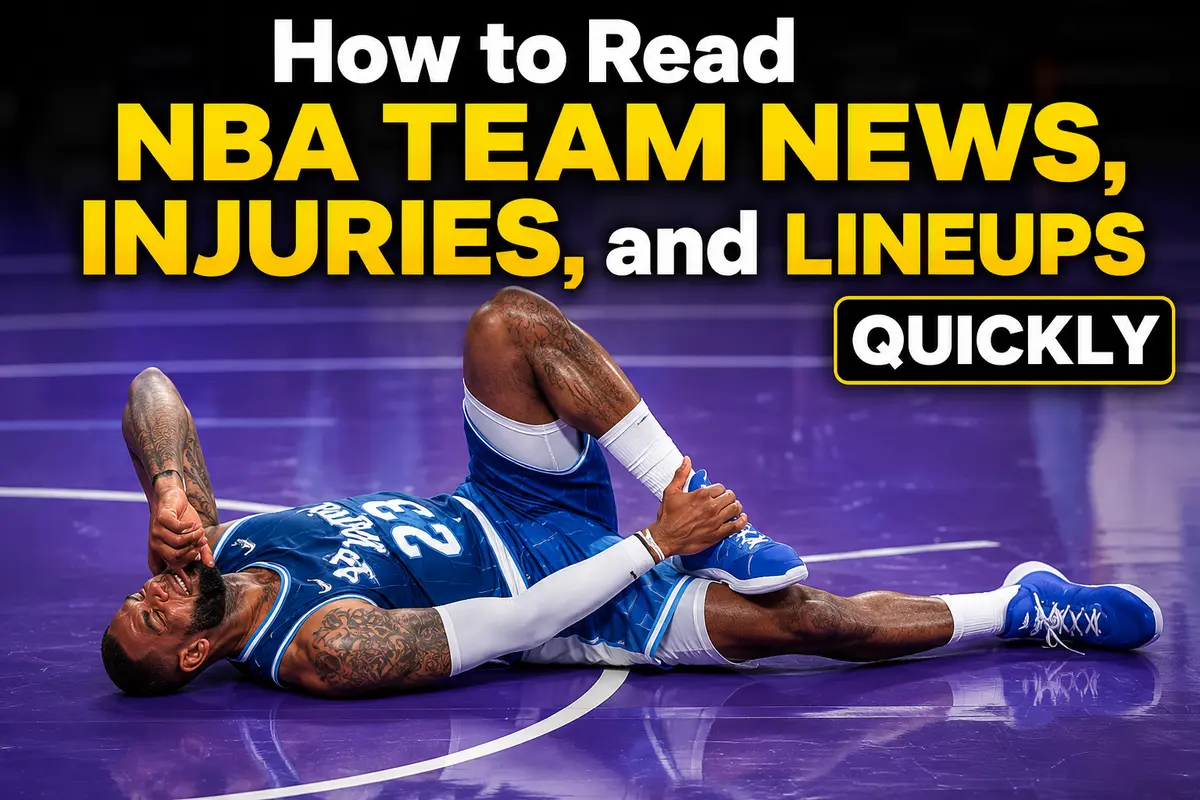

I remember the first time I tried to follow NBA games seriously. I spent hours scrolling through articles, refreshing apps, and still missed key details about who was playing and who was sitting out. My fantasy team suffered, and I felt frustrated watching games without knowing why a key player was absent. If you have ever felt that way—rushing to catch up on team updates before tip-off—you are not alone. Learning to read NBA team news, injuries, and lineups efficiently can save you time and give you a real edge, whether you bet, play fantasy, or just want to enjoy the games more.
In this post, I will walk you through practical steps that I use myself. No fluff, just straightforward advice based on what works during a long season. By the end, you will know exactly where to look and how to process the information fast.
Why NBA Team News, Injuries, and Lineups Matter
NBA games change quickly. One player’s absence can shift minutes, matchups, and outcomes. For fantasy managers, it affects who you start. For bettors, it moves lines. Even casual fans want to understand why their favorite team looks different night to night.
Teams deal with back-to-backs, travel, and nagging issues all season. Official reports come out on a schedule, but real-time updates from reporters often arrive earlier. Mastering this process helps you stay ahead instead of reacting late.
I learned this the hard way during one playoff run. I ignored a late injury note and left a key guy in my lineup. He sat out, and I lost. Since then, I built a routine that takes minutes, not hours.
Also Read: StreamEast.com: Watch Free Live Sports with Amazing Secrets.
Understanding Official NBA Injury Reports
The NBA requires teams to submit injury reports with specific deadlines. For most games, teams must list players whose participation might be affected by 5 p.m. local time the day before. On game days, updates come between 11 a.m. and 1 p.m. local time, with earlier windows for afternoon tips. Back-to-backs have adjusted times.
Key statuses you will see:
- Out: Clear no-go, often with a timeline.
- Doubtful: Low chance of playing.
- Questionable: Real 50/50 territory.
- Probable: Likely to play.
- Day-to-Day: Vague but common for minor issues.
These reports list the reason—ankle, knee, illness, rest, etc. Always check the official NBA site or league-approved sources for the most accurate version.
Reading Between the Lines on Injury Reports
Statuses are not always final. Questionable players sometimes sit, and probable ones occasionally miss time. This is where context matters. Look at the player’s history with that injury. A star with a minor ankle tweak might play through it, while a role player could sit.
I pay attention to practice participation and shootaround reports. If a player goes full in practice, odds improve. Reporters often share these details on social media before official updates.
Also Read: Streameast MLB: Master Streaming Tips for Reliable Games.
Best Sources for Fast NBA Team News and Updates
You need reliable spots that deliver info without wasting your time.
Official and Major Sites:
- NBA.com for the league injury report.
- ESPN NBA injuries page—clean team-by-team breakdowns.
- CBS Sports and RotoWire for detailed status and fantasy notes.
News Aggregators and Apps:
- Rotoworld (NBC Sports) for player news, injuries, and transactions.
- RotoGrinders for lineup alerts, especially useful around game time.
Social Media for Breaking Info: Follow team beat writers on X (Twitter). They attend practices and provide the earliest updates. Create a list for your favorite teams or use NBA-specific alert accounts. Many fantasy players swear by this for last-minute changes.
I keep a short list of trusted reporters for the teams I follow most. It cuts through noise and gets me the details I need quickly.
How to Check and Interpret NBA Lineups Efficiently
Lineups show who starts and often hint at rotation plans. Sites like RotoWire, NBA.com, and Rotogrinders update projected and confirmed starters.
Look for:
- Projected starters with minutes estimates.
- Notes on who might see extra time due to injuries.
- Bench players stepping up.
Lineups can shift due to matchups, rest, or hot/cold streaks. A coach might bench a struggling starter or adjust for defensive needs.
Also Read: StreamEast UFC: Best Unmissable Live Streams and Schedule.
Example: Knicks vs Spurs Scenario
Suppose the Knicks list Jalen Brunson, Mikal Bridges, Josh Hart, OG Anunoby, and Karl-Anthony Towns as starters, with Mitchell Robinson listed as probable. If Robinson plays, the frontcourt stays strong. If he sits, Towns might play more minutes at center, and someone like Hart could see extra time. These shifts affect fantasy points and betting props directly.
Check lineups 30-60 minutes before tip-off when possible. Many apps send push notifications for changes.
Tools and Apps That Speed Up Your Process
Mobile apps make this easier. Set notifications for injury and lineup alerts. RotoGrinders app is popular for real-time DFS and news pushes.
Browser bookmarks or a dashboard with multiple tabs help too:
- ESPN injuries
- Official NBA report
- Favorite team’s beat writer list
- Lineup page
I use a simple routine: morning check of overnight news, afternoon injury reports, and pre-game lineup refresh. It takes 10-15 minutes total on busy days.
Also Read: Streameast Live: Best Way to Watch Sports Streams Online.
Common Pain Points and How to Handle Them
Late Changes: Players can be ruled out close to tip-off. Rely on alerts and multiple sources. Do not lock in fantasy lineups too early.
Vague Updates: “Day-to-day” requires digging. Check recent games played and comments from coaches or players.
Information Overload: Focus on your teams or players. Ignore league-wide noise unless it affects matchups you care about.
Rest Decisions: Load management happens more with stars. Reports often list “rest” explicitly now.
One season, I followed a player listed questionable with a knee issue. Beat writers noted he was limited in practice, so I sat him in fantasy. He ended up out, and I avoided the headache. Small habits like that add up.
Tips for Fantasy Basketball Players
Injuries and lineups directly impact your roster. Prioritize players with stable roles. When a starter misses time, look at who benefits—often the next guy in the rotation gets minutes and usage boost.
Monitor minutes projections on lineup sites. A bench player suddenly starting could see 30+ minutes and become a streaming option.
Track trends: How does a team perform without their star? Some squads have strong benches; others struggle. This knowledge helps during injury stretches.
For Bettors: Turning Info Into Edges
Injury news moves betting lines. Get ahead by checking reports early and watching how lines react. A key player ruled out might create value on the other side if the market overreacts.
Follow real-time sources and compare across books. Historical data on teams without certain players adds confidence.
Building Your Personal Routine
Here is what works for me:
- Evening before games: Quick scan of next day’s injury report.
- Morning: Check social for practice updates.
- Afternoon: Official reports and lineup projections.
- Pre-tip: Final refresh and alerts.
Customize based on your schedule. Weekends might need a different flow than weekdays.
Stay consistent. The more you do it, the faster you get at spotting important details.
Advanced Strategies for Staying Ahead
- Create X lists for beat writers.
- Use fantasy or betting apps with built-in news feeds.
- Note patterns in coaching decisions—some teams rest players more aggressively on back-to-backs.
- Track depth charts for backup options when injuries hit.
During playoffs, intensity rises and reports matter even more. Every game counts, and availability can decide series.
Also Read: StreamEast WWE: Best Streaming Options, Schedules, and Tips.
Common Mistakes to Avoid
Relying on one source. Cross-check when possible.
Ignoring context like travel or recent workload.
Waiting until game time. Early checks give you time to adjust.
Overreacting to every questionable tag. Not every one leads to a miss.
I made most of these mistakes early on. Learning from them improved my experience with the league.
Wrapping Up Your NBA Information Routine
Reading NBA team news, injuries, and lineups quickly comes down to knowing the right sources, understanding report timing, and building simple habits. You do not need hours daily—just smart checks at key times.
Whether you manage a fantasy squad, place informed bets, or follow your team closer, these steps help you feel more connected to the action. The NBA season is long and full of twists. Staying on top of changes makes it more enjoyable and rewarding.
Start small. Pick one or two teams or a fantasy lineup and apply these methods for a week. You will notice the difference quickly. The games become sharper when you know who is really out there and why.
Feel free to adapt this approach to fit your life. The goal is efficiency so you can spend more time enjoying basketball instead of hunting for updates. If you have your own tips that work well, I would love to hear them in the comments.
For more useful articles, visit my website: StreamEastt.us.